
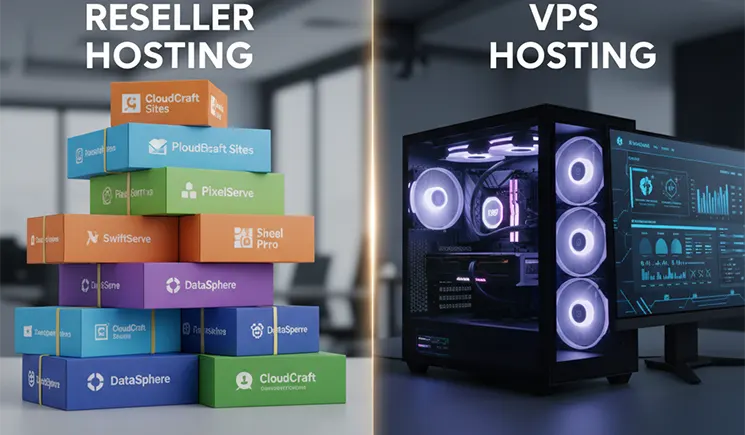
Choosing the right hosting solution can make or break your online business. Many people struggle to decide between different hosting options, especially when considering becoming a web hosting reseller or upgrading their website performance.
Two popular choices that often confuse beginners are reseller hosting and VPS hosting. Both serve different purposes and target different business needs.
Understanding these hosting types helps you make smart decisions for your website or business goals. This guide breaks down the main hosting reseller and VPS hosting differences to help you choose the right option.
What is Reseller Hosting?
Reseller hosting lets you buy hosting space from a larger company and sell it to your own customers. When you choose reselling hosting services, you get tools to manage multiple customer accounts. You can create hosting packages, set prices, and handle customer support. The main hosting company takes care of the servers, but you handle everything else.
What is VPS Hosting?
VPS hosting takes one powerful server and divides it into smaller virtual servers. Each virtual server acts like its own separate computer with dedicated resources.
You get guaranteed RAM, storage and processing power that nobody else can use. This means better performance and more control over your hosting environment.
Key Differences Between Reseller and VPS Hosting
Purpose and Target Users
Reseller hosting targets people who want to start reselling hosting services. Web designers often opt for this to offer hosting alongside their design services.
VPS hosting suits businesses that need better performance and more control over their server environment. It works for growing websites that outgrew shared hosting but cannot afford dedicated servers.
Control and Access
Reseller hosting gives limited control. You can manage customer accounts, but you cannot access the actual server settings. The hosting company controls all technical aspects.
VPS hosting provides root access and full control over your server space. You can install custom software, change server settings and configure everything according to your needs.
Resources and Performance
Reseller hosting shares resources among all accounts under your plan. Performance depends on the parent company’s server quality and how many websites use the same resources.
VPS hosting allocates dedicated resources to your virtual server. You get guaranteed RAM, CPU power and storage that other users cannot affect. This leads to better and more consistent performance.
Cost Comparison
Cheap reseller hosting costs less monthly. However, you need customers to make money from it. Without customers, you only spend money without earning anything.
VPS hosting costs more, depending on resources. But you get immediate value for your own websites or applications. Better performance often leads to higher conversions and revenue.
Technical Requirements
Reseller hosting needs minimal technical knowledge. The hosting company provides user-friendly control panels to manage customer accounts.
VPS hosting requires some technical understanding, especially for unmanaged plans. You need to know basic server management, security practices and troubleshooting.
Which Should You Choose?
Choose reseller hosting if you want to start a hosting business or offer hosting services to your existing clients. It works great for web designers and developers who need cheap reseller hosting to expand their service offerings.
Choose VPS hosting if you need high performance, more control or plan to run resource-heavy applications. Look for the best VPS hosting providers that offer good support and reliable infrastructure.
Conclusion
Both reseller hosting and VPS hosting serve different business needs. Reseller hosting helps you start a hosting business with minimal investment and technical knowledge. VPS hosting provides better performance and control for growing websites.

