
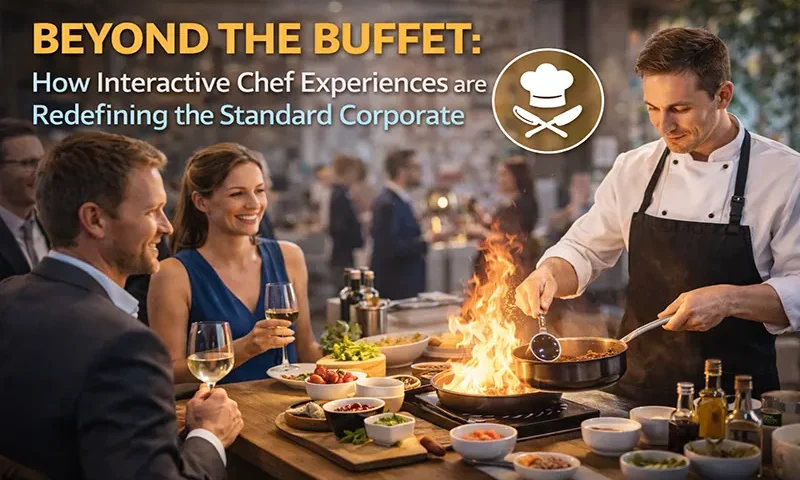
In the modern corporate world, the traditional business dinner has become a predictable, often uninspiring ritual. We’ve all been there: a dimly lit steakhouse, a choice between salmon or chicken, and polite small talk that rarely breaks the surface of professional etiquette. While these dinners serve a purpose, they often fail to achieve the primary goal of corporate gathering—genuine connection.
As we move through 2025, a significant shift is occurring in the culinary business landscape. High-growth companies are moving away from passive catering and toward Interactive Private Chef Experiences. This isn’t just about food; it’s about turning the act of dining into a theatrical, collaborative event that fosters team culture and seals client relationships far more effectively than a standard buffet ever could.
The Psychology of Social Cooking: Why Theatrics Matter
The primary reason interactive dining is exploding in popularity is rooted in human psychology. When a group sits at a table waiting for food to be brought from a hidden kitchen, the dynamic is stagnant. However, when a chef stands in the center of the room—searing, plating, and explaining the origin of a rare spice—the energy shifts.
This “theatrical” element acts as a natural icebreaker. The focus moves from the pressure of forced conversation to a shared sensory experience. Scientific studies on workplace bonding suggest that shared novelty—experiencing something new together—is the fastest way to build trust. Watching a chef perform a high-skill technique, like a tableside liquid nitrogen dessert or a precision knife demonstration, provides a “neutral” topic of conversation that allows coworkers and clients to bond without the awkwardness of shop talk.
The Death of the “One-Size-Fits-All” Menu
One of the greatest headaches for HR managers and executive assistants is the modern dietary landscape. In any given team of twenty, you likely have a mix of vegan, gluten-free, keto, and allergy-restricted diets. Traditional catering often handles this by providing a “bland” safe option that leaves the guest feeling like an afterthought.
Interactive private chefs solve this through real-time customization. Because the chef is present and cooking to order, they can pivot with ease. A “Chef’s Table” setup allows for a dialogue between the guest and the creator. If a guest mentions a late-breaking dietary need, the chef can adjust a sauce or swap a protein right in front of them. This level of personalized care creates a “VIP” feeling for every attendee, signaling that the company values their individual needs and well-being.
ROI: From “Feeding the Team” to “Inspiring the Team”
For many CFOs, a dinner is an expense. For visionary leaders, an interactive dinner is an investment. The ROI of an interactive chef experience is measured in three distinct areas:
- Retention and Culture: In the era of hybrid work, the time teams spend together in person is more valuable than ever. A memorable, high-touch culinary event makes employees feel appreciated in a way that a generic gift card or a plastic-wrapped sandwich never could.
- Collaborative Learning: Many interactive experiences include a “mini-masterclass” element. Whether it’s learning the secret to a perfect emulsion or the history of a regional Italian pasta, guests walk away with a new skill. This culture of learning and curiosity often translates back into the workplace.
- Client Closing Power: If you are trying to win a high-value client, taking them to a restaurant where they are just one of a hundred diners is a missed opportunity. Hosting them for an exclusive, private chef experience shows a level of effort and sophistication that differentiates your firm from the competition.
Logistical Ease: The “Pop-Up” Transformation
Perhaps the most practical advantage of the private chef model is the flexibility of location. Modern culinary professionals are equipped to turn almost any space into a 5-star kitchen.
We are seeing a trend of “Boardroom Transformations,” where companies use their own high-end office spaces to host these events. This eliminates the logistical nightmare of transporting an entire team to a restaurant during rush hour and ensures a private, secure environment for sensitive business discussions. From the meticulous sourcing of local, sustainable ingredients to the final post-dessert cleanup, the chef manages the entire ecosystem, allowing the business leaders to focus entirely on their guests.
The Future of Corporate Hospitality
The “Experience Economy” is here to stay. Professionals in 2025 aren’t just looking for calories; they are looking for stories. They want to know where their food came from, how it was prepared, and the person behind the craft.
Interactive dining provides that story. It replaces the “lukewarm buffet” with a vibrant, aromatic, and engaging atmosphere. It turns a mandatory corporate function into a highlight of the quarter. As businesses continue to compete for talent and client loyalty, those who master the art of the experience will always have a seat at the head of the table.
Key Takeaways for Your Next Event:
- Engagement is the new currency: Don’t just serve food; provide a show.
- Personalization is mandatory: Use the chef’s presence to cater to individual tastes.
- Privacy is a luxury: Use your own space or a dedicated private loft to ensure the conversation stays within the room.
Conclusion: The next time you are tasked with “organizing a dinner,” ask yourself: do you want a meal, or do you want a memory? The answer will dictate your company’s success in building the relationships that matter most.

